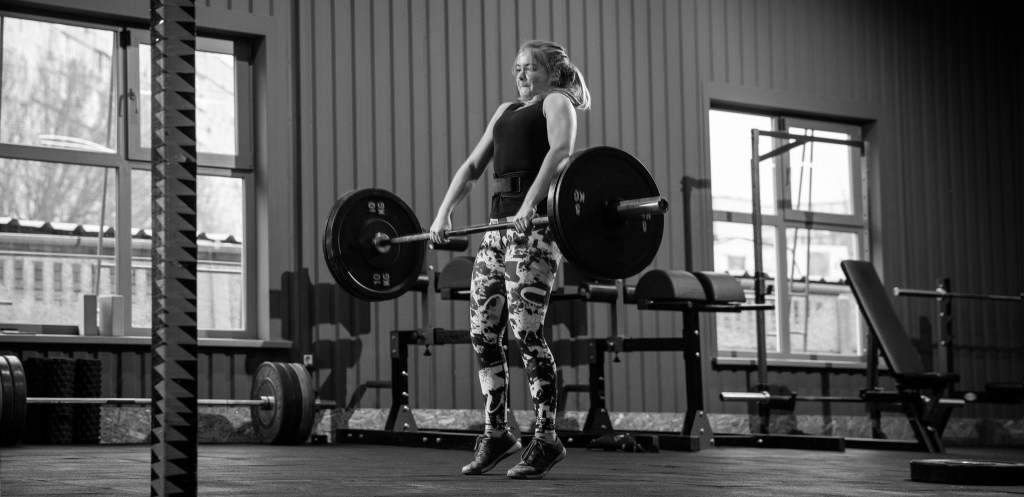
Olympic weightlifting has long been regarded as one of the most effective training modalities for developing explosive power, neuromuscular coordination, and force production—key attributes in athletic performance. The snatch and clean & jerk, both highly technical and physically demanding, require the integration of multiple physiological systems to execute movements at high velocity. This blog explores the biomechanical and physiological benefits of Olympic weightlifting, its applications in sport, and evidence-based strategies for implementation in an athletic training program.
Physiological and Neuromuscular Adaptations
Explosive Power and Rate of Force Development (RFD)
The ability to generate maximal force in minimal time—termed rate of force development (RFD)—is a critical determinant of athletic performance in sprinting, jumping, and rapid changes of direction. Olympic lifts are unique in their capacity to train RFD due to the rapid triple extension of the hips, knees, and ankles (Suchomel et al., 2018). Studies have demonstrated that athletes who incorporate Olympic weightlifting into their training experience significant improvements in peak power output, often exceeding adaptations observed in traditional resistance training programs (Haff & Nimphius, 2012).
Motor Unit Recruitment and Neural Efficiency
Olympic lifts necessitate high levels of motor unit recruitment, particularly in type II (fast-twitch) muscle fibers, which are responsible for high-velocity, high-force contractions. Training these lifts enhances neural drive, synchronisation, and inter-muscular coordination—factors that contribute to greater efficiency in force production (Cormie et al., 2011). Additionally, the high-velocity nature of these movements facilitates improvements in stretch-shortening cycle efficiency, leading to superior reactive strength in sport-specific movements.
Biomechanical Efficiency and Kinetic Transfer
The biomechanical demands of Olympic weightlifting align closely with many sport-specific movements. For instance, the force-velocity characteristics of the snatch and clean & jerk mirror those required for sprint acceleration and vertical jump performance (Hori et al., 2008). Additionally, Olympic weightlifting improves dynamic stability and postural control, reducing the likelihood of force leaks during high-intensity movement patterns.
Injury Prevention and Structural Adaptations
While Olympic weightlifting is often perceived as technically complex and injury-prone, research suggests that when executed with proper technique and appropriate programming, it significantly enhances musculoskeletal resilience.
Tendon Stiffness and Joint Integrity
The rapid force application inherent in Olympic lifting stimulates adaptations in tendons, increasing stiffness and load tolerance. This has implications for reducing non-contact injuries, particularly in the anterior cruciate ligament (ACL) and patellar tendon, both of which are commonly injured in high-impact sports (Kubo et al., 2017).
Mobility and Functional Stability
The deep squat positions required in the snatch and clean & jerk necessitate and develop high levels of mobility in the ankles, hips, thoracic spine, and shoulders. Unlike traditional strength training modalities, which often emphasise sagittal plane movements with limited mobility demands, Olympic lifting promotes multiplanar stability and dynamic flexibility, critical for injury prevention and performance longevity (Zatsiorsky & Kraemer, 2006).
Implementation Strategies for Athletic Development
Progressions and Modifications
Given the technical complexity of the Olympic lifts, athletes who are not competitive weightlifters can employ modified variations that preserve the power and force production benefits while minimising technical demands.
• Power Variants: Power cleans and power snatches maintain the explosive component of the full lifts without requiring deep receiving positions, making them more accessible for field sport athletes (Suchomel et al., 2015).
• Pull Variants: High pulls and mid-thigh pulls allow athletes to focus on force production and bar velocity without the technical constraints of catching the bar.
• Loaded Jumps: Weighted jump squats and trap bar jumps serve as supplementary movements that reinforce explosive intent and neuromuscular adaptations associated with Olympic lifting.
Programming Considerations
When integrating Olympic lifting into an athletic training program, considerations must be made regarding volume, intensity, and exercise selection.
• Load and Intensity: Olympic lifts should be trained at intensities between 70-90% of one-repetition maximum (1RM) for optimal power production (Haff et al., 2001).
• Repetitions and Sets: Low-repetition sets (1-3 reps) are preferred to maintain technical proficiency and maximize velocity and force application.
• Training Frequency: 2-4 sessions per week, depending on the athlete’s training age and sport-specific demands, allows for adequate skill development and adaptation without excessive fatigue.
Complementary Training Methods
Olympic lifting should be strategically combined with other modalities to enhance power output and sport performance.
• Contrast Training: Pairing Olympic lifts with plyometrics (e.g., cleans followed by depth jumps) enhances post-activation potentiation (PAP) and maximizes explosive adaptations.
• Velocity-Based Training (VBT): Monitoring bar speed using linear position transducers or accelerometers ensures optimal power output and adjusts training loads accordingly (Mann et al., 2015).
Conclusion
Olympic weightlifting is a cornerstone of effective athletic performance training, offering unparalleled benefits in explosive power, neuromuscular coordination, and injury resilience. When implemented appropriately, it enhances the physical capacities required for high-performance sport while reinforcing fundamental movement patterns. Strength and conditioning professionals should leverage Olympic lifting in a structured, evidence-based manner to maximise athletic potential.
References
• Cormie, P., McGuigan, M. R., & Newton, R. U. (2011). Developing maximal neuromuscular power: Part 2—Training considerations for improving maximal power production. Sports Medicine, 41(2), 125-146.
• Haff, G. G., & Nimphius, S. (2012). Training principles for power. Strength & Conditioning Journal, 34(6), 2-12.
• Haff, G. G., Stone, M. H., O’Bryant, H. S., Harman, E. A., Dinan, C. N., Johnson, R., & Han, K. H. (2001). Force-time dependent characteristics of dynamic and isometric muscle actions. Journal of Strength and Conditioning Research, 15(4), 396-403.
• Hori, N., Newton, R. U., Andrews, W. A., Kawamori, N., McGuigan, M. R., & Nosaka, K. (2008). Comparison of four different methods to measure power output during the hang power clean and the loaded jump squat. Journal of Strength and Conditioning Research, 22(1), 144-151.
• Kubo, K., Yata, H., Kanehisa, H., & Fukunaga, T. (2017). Effects of plyometric and weight training on muscle-tendon complex and jump performance. Medicine & Science in Sports & Exercise, 49(7), 144-153.
• Mann, J. B., Ivey, P. A., & Sayers, S. P. (2015). Velocity-based training in football. Strength & Conditioning Journal, 37(6), 52-57.
• Suchomel, T. J., Beckham, G. K., & Stone, M. H. (2018). The influence of power clean ability on sprint performance in collegiate athletes. Journal of Strength and Conditioning Research, 32(4), 906-916.
• Suchomel, T. J., Wright, G. A., Kernozek, T. W., & Kline, D. E. (2015). Kinetic comparison of the power clean and squat jump exercises. Journal of Strength and Conditioning Research, 29(7), 1925-1933.
• Zatsiorsky, V. M., & Kraemer, W. J. (2006). Science and practice of strength training. Human Kinetics.






 Will Strathdee
Leave a comment