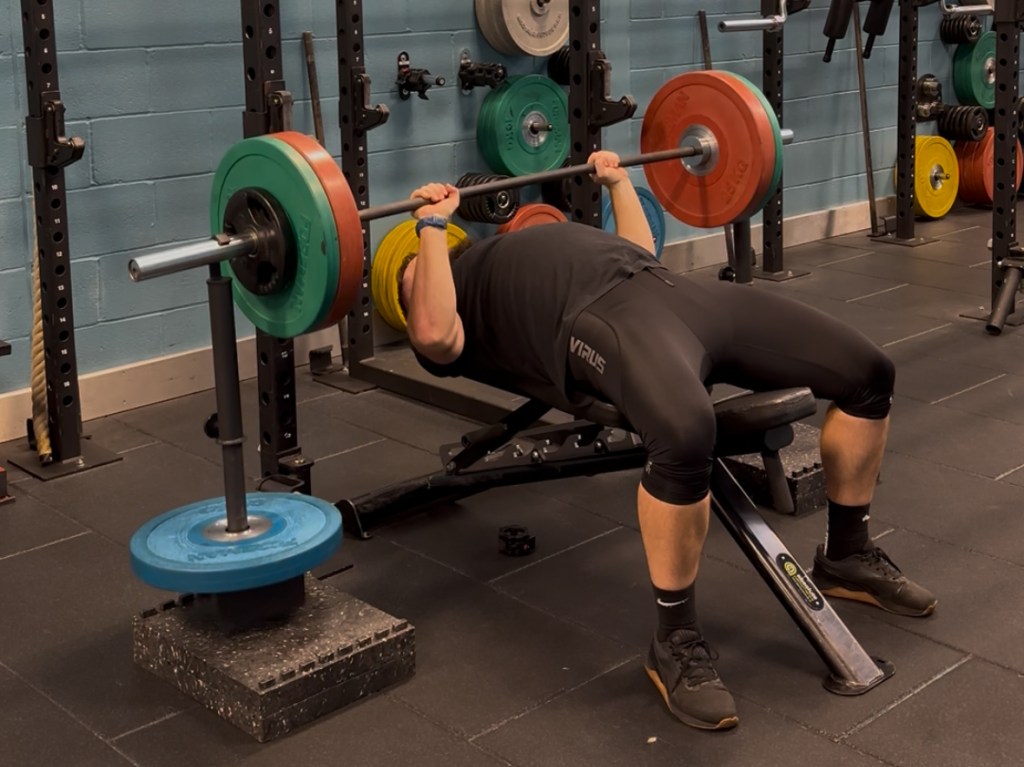
In every era of strength and conditioning, complexity becomes fashionable.
New sequencing strategies, contrast pairings, multi-planar “chaos” circuits, highly specific block periodisation models.
None of these are inherently wrong. Many are legitimate tools within a coach’s arsenal. The issue arises when complexity becomes the default rather than the deliberate exception.
For most athletes and most coaches the limiting factor is not a lack of programming sophistication. It is the inconsistent application of foundational principles. That is where the KISS principle remains not just relevant, but essential.
What Do We Mean by “Complex Training”?
Complex training modalities typically refer to methods that layer multiple stimuli within a session or block. This may include heavy strength movements paired with plyometrics (often termed contrast or complex training), highly variable movement environments, or rapidly shifting emphases across training cycles.
Contrast methods in particular have been discussed extensively in the literature, with early reviews outlining their potential to enhance power output through mechanisms related to post-activation potentiation (Ebben, 2002). When applied in trained populations with appropriate loading and rest intervals, these methods can be effective.
But potential utility is not the same as universal necessity. Complexity is a tool. It is not a foundation.
Why Complexity Is Attractive
Complex training is intellectually appealing. It signals innovation. It appears tailored. It feels advanced. In an industry increasingly influenced by short-form content and visible differentiation, complexity photographs well. It looks progressive.
Simplicity, on the other hand, looks ordinary. Three progressively overloaded sets of squats rarely go viral.
Yet physiological adaptation does not respond to novelty. It responds to sufficient mechanical tension, appropriate volume, and repeated exposure over time. Across resistance training research, progressive overload remains the primary driver of strength and hypertrophy (American College of Sports Medicine, 2009; Schoenfeld, 2010).
The body does not reward creativity. It rewards consistency.
What the Evidence Continues to Show
Several themes remain stable across contemporary resistance training literature:
- Moderate volumes performed with sufficient intensity are effective for strength development.
- Proximity to failure and total weekly set volume account for a large proportion of hypertrophy outcomes.
- Time-efficient programs built around compound movements produce meaningful adaptations without excessive complexity.
- Minimum effective dose approaches can yield significant strength gains in trained individuals when load and effort are controlled.
- (ACSM 2009, Schoenfeld 2010, Androulakis-Korakakis et al., 2021, Iversen et al. 2021).
None of these findings suggest that complex modalities are ineffective. Rather, they reinforce that foundational programming variables explain the majority of adaptation variance.
When those principles are poorly implemented, adding complexity rarely compensates.
The Professional Discipline of Simplicity
Applying the KISS principle in training is not a lack of imagination. It demonstrates restraint.
Restraint requires clarity:
- What physical quality am I developing?
- What is the limiting variable?
- What is the smallest effective intervention to move that variable forward?
When coaches cannot clearly identify the limiting factor, the temptation is to increase the number of variables.
More exercises.
More sequencing layers.
More movement variation.
However, increasing variables often decreases signal clarity. It becomes harder to determine what is actually driving adaptation. As discussed in recent conceptual work on complexity in resistance training, increasing task difficulty without precise load control can alter the stimulus in unpredictable ways (La Scala Teixeira et al., 2019).
Simplicity enhances measurability.
Measurability enhances progression.
Progression drives results.
Where Complex Modalities Do Belong?
There are contexts where complexity is justified.
Highly trained athletes chasing marginal gains may benefit from carefully structured contrast pairings to maximise neural drive and power transfer.
Return-to-sport environments may require layered, reactive movement challenges that reflect competitive demands.
Pre-competition phases may integrate complex sequencing to consolidate multiple physical qualities within limited time frames.
But in each of these scenarios, complexity is purposeful and constrained. It is introduced on top of a robust foundation of maximal strength, tissue capacity, and technical proficiency. Without that base, complex modalities become cosmetic.
A Simple Structure That Works
For the majority of athletes, a training structure built around:
- 2–4 weekly exposures to primary movement patterns
- Progressive loading within clearly defined rep ranges
- Adequate proximity to failure
- Intentional rest and recovery
- Long-term tracking of performance markers
will deliver predictable and sustainable results. Not because it is trendy. But because it respects physiology.
Below is an example of an intentionally simple 8-week structure.
Example: 8-Week Foundational Strength Structure (3 Days Per Week)
Weekly Structure (e.g., Monday / Wednesday / Friday)
- Session A: Heavy Lower + Upper Push
- Session B: Heavy Upper + Lower Accessory
- Session C: Moderate/Dynamic Lower + Upper Hypertrophy
Session A
- Back Squat – 3 × 4–6 reps @ RPE 7–9
- Romanian Deadlift – 3 × 6–8 reps
- Dumbbell Bench Press – 3 × 6–8 reps
- Pull-Ups or Lat Pulldown – 3 × 6–8 reps
- Plank Variation – 3 × 30–60 seconds
Squat progression: Increase load once 3 × 6 is achieved across all sets with controlled execution.
Session B
- Barbell Bench Press – 3 × 4–6 reps
- Barbell Row – 3 × 6–8 reps
- Rear-Foot Elevated Split Squat – 3 × 6–8 reps each side
- Hamstring Curl (Machine or Nordic Variation) – 3 × 8–10 reps
- Loaded Carry – 3 × 20–30 metres
Session C
- Trap Bar Deadlift – 3 × 3–5 reps (moderate load, high intent)
- Front-Foot Elevated Split Squat – 3 × 8 reps
- Incline Dumbbell Press – 3 × 8–10 reps
- Chest-Supported Row – 3 × 8–10 reps
- Anti-Rotation Core Work – 3 sets
Optional: Limited Complex Integration
For advanced athletes only, one contrast pairing per week may be introduced:
Example:
- Back Squat 3 reps (heavy)
- Paired with Box Jump 3 reps
- 2–3 total pairings with full recovery
This is layered onto the foundation not substituted for it.
Standards Over Trends
Coaching maturity is not measured by how many methods one can deploy. It is measured by knowing when not to deploy them.
In a profession that often rewards visible innovation, there is quiet value in methodological consistency.
Simple does not mean easy. Simple means disciplined.
For most athletes, long-term progress is built on repeatable structure, progressive overload, and clarity of intent not increasingly elaborate session design.
Complex training modalities have their place. They simply do not need to be the starting point.
References
American College of Sports Medicine. (2009). Progression models in resistance training for healthy adults. Medicine & Science in Sports & Exercise.
Androulakis-Korakakis, P., et al. (2021). Minimum effective dose resistance training for improving muscular strength: A systematic review. Sports Medicine / Frontiers in Sports and Active Living.
Ebben, W. P. (2002). Complex training: A brief review. Journal of Sports Science & Medicine.
Iversen, V. M., et al. (2021). No time to lift? Designing time-efficient training programs for strength and hypertrophy. Sports Medicine.
La Scala Teixeira, C. V., et al. (2019). Complexity: A novel load progression strategy in strength training? Frontiers in Physiology.
Schoenfeld, B. J. (2010). The mechanisms of muscle hypertrophy and their application to resistance training. Journal of Strength and Conditioning Research.







 Will Strathdee
Leave a comment