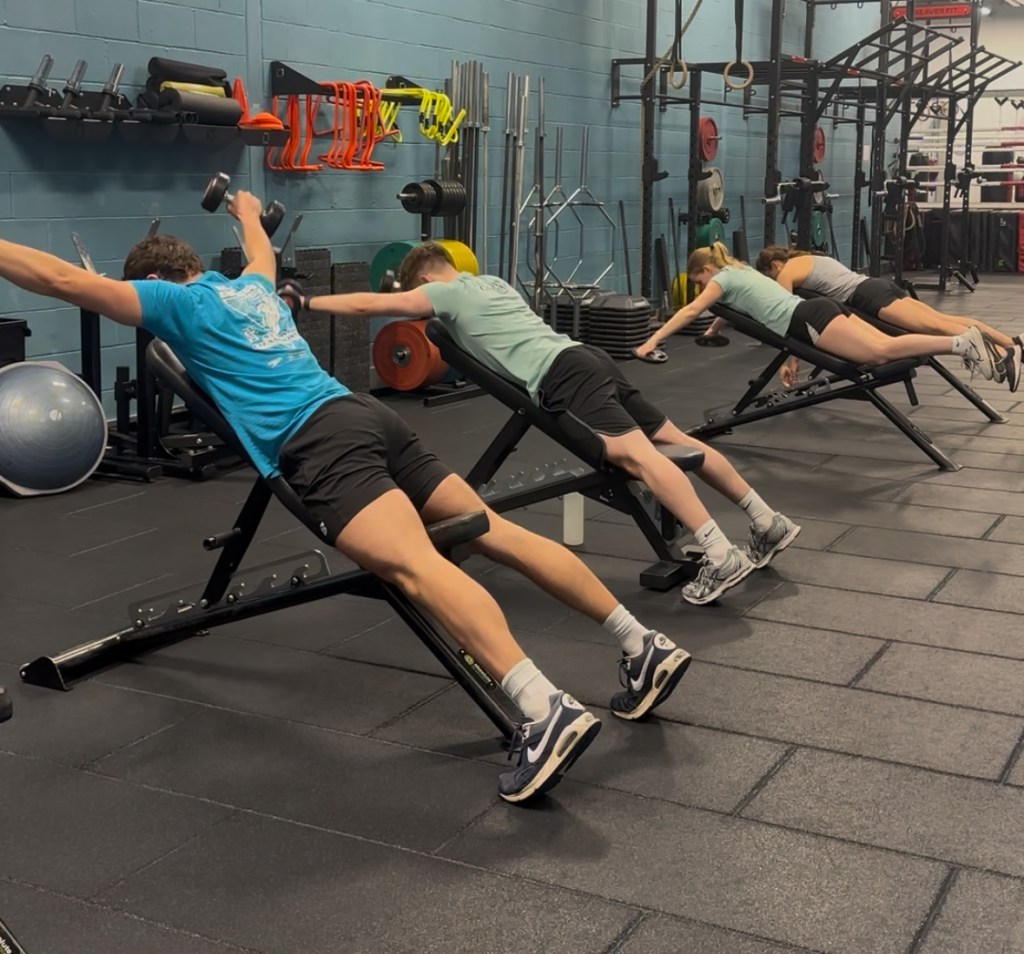
There is a persistent assumption in performance training that the closer an exercise looks to the sport, the more useful it must be. Walk into enough facilities and you’ll likely see things such as cable rotations designed to resemble golf swings, resisted sprint drills pulling athletes in multiple planes, and unstable variations intended to mimic the chaos of sport. The intention is usually appropriate. Coaches are trying to individualise and are trying to be too precise. They are trying to bridge the gap between the gym and the field. The problem is that resemblance is not the same as transference.
Specificity, properly understood, is not about whether a movement looks similar to the sport. It is about whether the imposed demands meaningfully develop the physiological qualities that underpin performance.
The SAID principle makes this clear: adaptation reflects the nature of the stress applied. The neuromuscular system responds to force magnitude, rate of force development, contraction velocity, joint angles under load, coordination demands, and energetic stress. It does not respond to visual similarity.
This is where much “sport-specific” training quietly goes wrong. In attempting to reproduce the sport in the weight room, we often compromise the very qualities that matter most.
The most common casualty of this is the reduction in load. As exercises become more complex or constrained in an attempt to look sport-like, they typically become lighter. Unstable surfaces, awkward positions and elaborate cable setups all reduce the athlete’s ability to produce high levels of force. Yet force production capacity remains foundational to most explosive sporting actions. There is a strong relationship between maximal strength and sprint and jump performance across trained populations. Stronger athletes are not automatically faster, but they have access to greater force and impulse if their technical proficiency allows it. When we remove meaningful loading in favour of aesthetics, we limit the potential for adaptation.
A similar issue arises with velocity. True sporting actions such as sprinting, striking, throwing, all occur at high speeds with high intent. Adding bands or cables in an attempt to replicate these patterns often alters the force–time profile enough that the athlete is no longer training the quality we think they are. Elastic resistance changes timing, deceleration demands, and in some cases motor patterning. The nervous system adapts specifically to the velocities and coordination strategies it repeatedly experiences. If we want to improve maximal sprint velocity, at some stage the athlete must sprint at maximal velocity. There is no substitute for exposure to the real thing.
The third issue is more subtle and relates to motor learning. Skill acquisition is context dependent. Sprint mechanics improve through sprinting. Decision-making improves in environments that require decisions. Timing improves under the perceptual constraints of the sport. The weight room is exceptionally effective at building physical capacity – strength, stiffness, tolerance to load, power output etc but it is a poor environment for rehearsing complex sport specific skills. When we attempt to merge these aims into a hybrid drill that is neither heavily loaded nor contextually realistic, both outcomes become compromised. The session feels specific, but the adaptation becomes diluted.
A more productive way to think about strength and conditioning transfer is hierarchically. At the base sits general physical preparation: maximal strength, structural robustness and work capacity. These qualities are not visually specific, but they are broadly relevant. Maximal strength, in particular, appears to have wide transfer because it increases the ceiling of force an athlete can express.
Above this sits what might be termed special strength. Training that aligns more closely with the direction, rate and coordination of force application seen in sport without sacrificing intensity. Plyometrics, ballistic lifts and velocity-specific work fall here. This layer respects principles such as dynamic correspondence, where transfer depends on similarities in force magnitude, direction and timing rather than superficial appearance.
Finally, at the top of the hierarchy is specific preparation: technical execution under competitive constraints. This layer belongs primarily in the sport itself, where perception, timing and tactical context are authentic to the specific demands.
This distinction matters because preparation and expression are not the same thing. The gym’s role is to expand capacity. The sport’s role is to organise and express that capacity under constraint. Confusing the two leads to programming that is appears aesthetic and specific but is physiologically underwhelming.
However, it is worth acknowledging why this confusion persists. Athletes often enjoy movements that feel directly connected to their sport. Coaches, understandably, want to demonstrate individualisation. In an environment and industry where differentiation is valued, simple heavy squats can appear generic, while a bespoke jumping sequence appears precise. But effective training is not judged by how well it photographs. It is judged by whether performance improves.
This is not an argument against specificity. Sport-specific training is essential when refining technique, integrating physical qualities into tactical systems, preparing for competition phases or returning from injury. However, that work should predominantly occur in the sporting environment, where the mechanical and perceptual demands are genuine. The weight room does not need to replicate the sport. It needs to prepare the athlete for it.
In practice, this requires restraint. Before labeling an exercise as sport-specific, it is worth asking what physical quality is actually being targeted and whether the chosen method is the most effective way to overload it. If load is compromised, if velocity is distorted or if the coordination demands do not resemble the sporting context, then the drill and exercise is unlikely to transfer in any meaningful way.
Performance is ultimately an emergent property of physical capacity expressed under constraint. The sport determines expression and the training determines capacity. True specificity is not about copying movements. It is about understanding which qualities determine performance and developing them with enough intensity and exposure that the sport can later express them.



 Will Strathdee
Leave a comment